People
Dr. Schelly works with students as collaborators to conduct engaged research that aims to facilitate socio-technological and socio-ecological transitions that enhance sustainability, resilience, and wellbeing. Dr. Schelly’s students share a passion for working towards a more just, equitable, sustainable, and resilient future.
Current Students

Vincent Idoko (PhD in Environment and Resources)
Vincent Idoko is a PhD student in environment and resources at UW-Madison, and Dr. Schelly is his PhD advisor. Prior to joining the PhD program, Vincent completed an MS in sustainable communities at Michigan Tech, working with Dr. Schelly.
Vincent has done research on ethical research engagement and partnership with Tribal Nations and other marginalized communities as well as energy justice in energy transitions associated with specific socio-technological systems innovations like electric vehicles and virtual power plants. His PhD research focuses on supporting climate resilience in Great Lakes communities through stakeholder and community engagement.

Mercedes Asamani, (PhD in Environment and Energy Policy)
Mercedes Asamani is a PhD student in environmental and energy policy at Michigan Tech, and Dr. Schelly is one of her dissertation committee members. Her research focuses on energy policy and justice, climate education, socio-technical system transitions, and community engagement.
She is also the founder and executive director of the Institute for Development (Ghana), a non-profit organization in Ghana.
Prior to joining Michigan Tech, she worked as a research assistant at the Ghana Centre for Democratic Development. Mercedes has earned a master’s degree in public administration from the University of Ghana.

Abbi Halkola, (PhD in Environmental and Energy Policy)
Mercedes Asamani is a PhD student in environmental and energy policy at Michigan Tech, and Dr. Schelly is one of her dissertation committee members. Her research focuses on energy policy and justice, climate education, socio-technical system transitions, and community engagement.
Graduated Students

Mai Anh Tran, (PhD in Forestry Science)
Mai Anh Tran completed her PhD in forest science at Michigan Tech, and Dr. Schelly was her co-advisor. Her research interests are livelihood resilience, indigenous knowledge, sustainability, and human dimensions in natural resources management. She has field experience in Vietnam where she worked as field researcher.
Mai has a master’s degree in forest resources from Kookmin University. Dr. Tran’s dissertation focused on braiding Indigenous knowledges with climate science to support resilient livelihoods, working to support the Natural Resources Department of the Keweenaw Bay Indian Community.
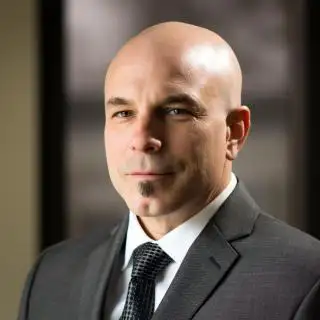
Don Lee (PhD in Environmental and Energy Policy)
Don Lee’s research focuses on democratization of energy systems through public ownership ensuring reliability and resilience through revenue reinvestment. His research efforts translate into community support for an engaged and informed decision making leading to locally accepted and regionally appropriate clean energy transition.
Through his research, Don aims to improve solutions of equitable access to energy and climate change mitigation. Dr. Lee completed his PhD in fall 2025 and he is currently working on projects associated with both data centers and energy justice and utility municipalization.
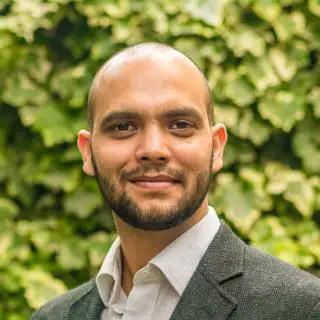
Shardul Tiwari (PhD in Environmental and Energy Policy)
While completing his PhD, Dr. Tiwari was a fellow at the Keweenaw Energy Transition Lab. He also worked with Dr. Schelly on an NSF-funded project focused on electrical grid resilience, and Dr. Schelly was one of his dissertation co-advisors. His research focuses on energy justice, energy policy, and looking at the integration of renewable energy technologies in the U.S electricity market.
Dr. Tiwari is now a postdoctoral researcher, assistant professor at Michigan Technological University, and an energy policy consultant. He has been conducting research on the social aspects of energy security and energy justice.
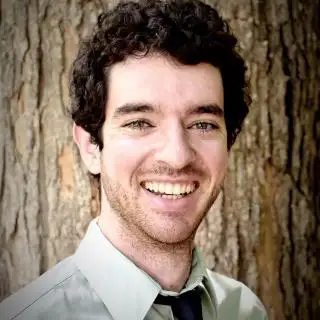
William Lytle (PhD in Environmental and Energy Policy)
Dr. Lytle has intentionally cultivated experiences to understand and address complex socio-ecological problems. Drawing from a variety of perspectives including finance, policy, built infrastructure, media, ecology, sociology, politics, and strategic planning, it has enabled him to manage diverse programs.
He is the founder of Evergreen International Sustainability Solutions, a platform for providing consulting services to industry, governments, and academia through Life Cycle Assessment (LCA), and institutional analysis in emerging markets.
While completing his PhD at Michigan Tech, Lytle was focused on the perception, practices, and policies that govern food, energy, and water consumption in a suburban US home, working as a researcher on an NSF-funded project and working with Dr. Schelly as his advisor.
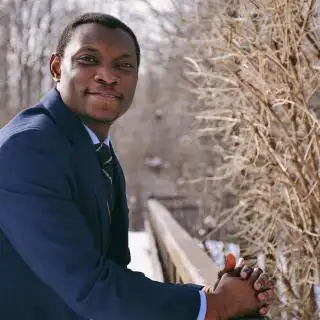
Adewale Adesanya (PhD in Environmental and Energy Policy)
Dr. Adesanya is the founder of Havenergy Consulting, which is engaged in decarbonization pathway analysis, project management, energy policy advisory, and energy justice and equity advocacy.
During his PhD tenure at Michigan Tech, he was part of the collaborative research on Michigan Indigenous Community and Anishinaabe Renewable Energy Sovereignty (MICARES) project, with Dr. Schelly serving as his dissertation advisor.
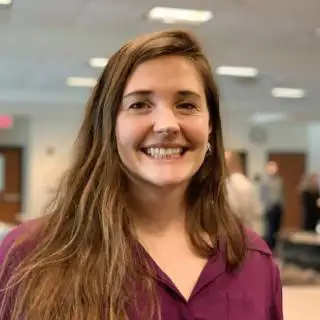
Emily Prehoda (PhD in Environmental and Energy Policy)
Dr. Prehoda is the chief operating officer of Chart House Energy. She is involved in providing policy support to the company in the form of monitoring and preparation of testimony regarding upcoming energy policy and changing legal environment.
Her other involvements include team management and development of solar projects for C&I and Municipal level solar projects. She is also responsible for overseeing regular operations alongside development of growth strategies.
Emily was inducted into the Michigan Tech College of Science and Arts Academy for her excellent leadership and impactful professional work. During her PhD program, advised by Dr. Schelly, Emily’s focus was on community solar, energy security, and energy policy.
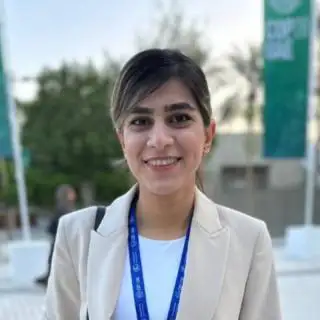
Nelly Aghaei (MS in Sustainable Communities)
Nelly completed an MS in sustainable communities at Michigan Tech and worked as a research assistant on the Sloan Rural electrification project where she worked on evaluation of the barriers and drivers identified for energy transition of rural communities in the north.
Prior to joining the Department of Social Sciences at Michigan Tech, Nelly was a student in Tehran, Iran, where she earned her undergraduate degree in urban engineering from Azad University. She is now a PhD student in media and information at Michigan State University.
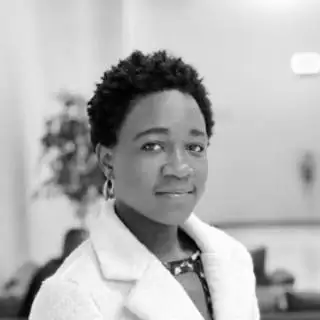
Nyasha Milanzi (MS in Sustainable Communities)
Nyasha has a technical background as an electrical engineer from Ashesi University in Ghana. Currently, and in her MS program, she has aligned her passion for civic engagement with her research interests in equitable energy transition in the underserved communities of Africa.
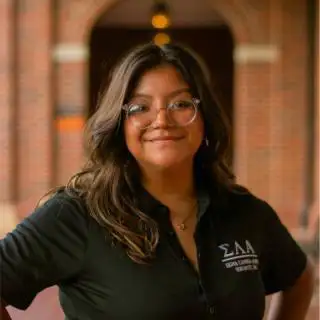
Kathy Huerta Sanchez (MS in Environmental and Energy Policy)
Kathy has a diverse work experience and is a management student with a BS in business administration from Oklahoma State University. In her MS program, she worked on projects involving climate policy making, just energy policy, and environmental justice elements.

Zoe Ketola (MS in Environmental and Energy Policy)
Zoe earned her master’s in environmental and energy policy at Michigan Tech where her research focused on sustainable redevelopment. This is exemplified in her thesis on Accepting Change: Facets of Acceptance & Sustainable Redevelopment.
Zoe has now moved on to her PhD in energy and environmental policy at the Biden School of Public Policy, University of Delaware. She focuses on energy justice and social science approaches in research to support community wellbeing while making sustainable transitions.

Christian Sheja (MS in Environmental and Energy Policy)
During Christian’s time at Michigan Tech he focused on the acreage available for agrivoltaics in Michigan communities with 100% renewable energy goals. He found that in all of the studied communities, agrivoltaics is possible and could provide economic benefits and help Michigan meet renewable energy and carbon goals.
This work can be shown in his thesis on Utility Scale Agivoltaics Development proximate to Michigan Communities with 100% Renewable Energy Goals.